Blog
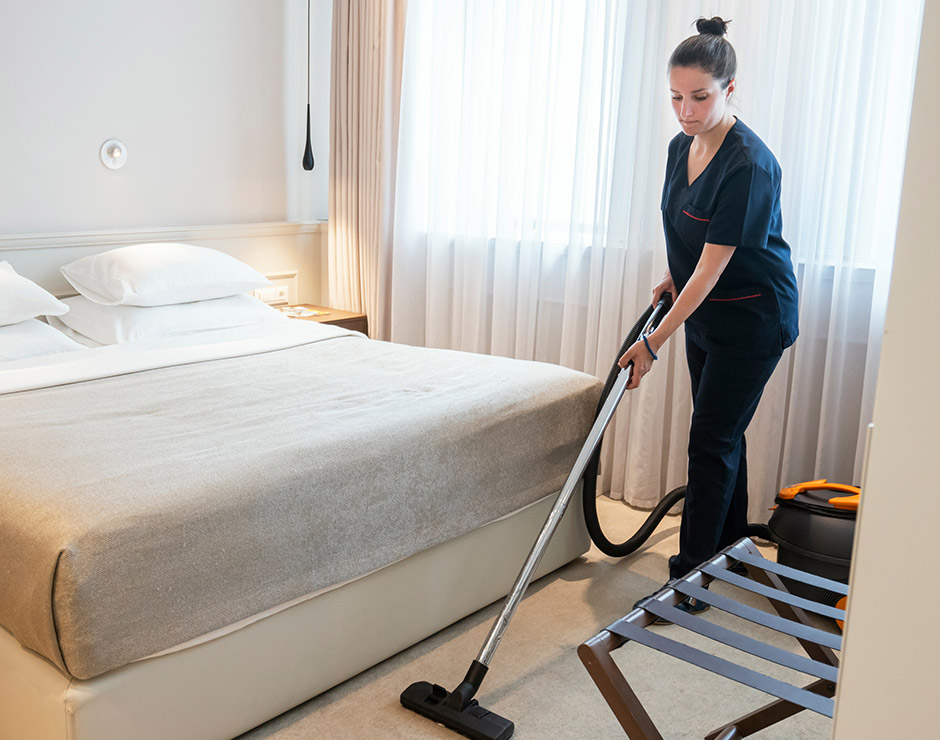
Overhead dust removal is critical for workplace air quality because dust that settles on elevated surfaces does not stay there. Every time air circulates through a room, vibrations occur, or HVAC systems run, that accumulated dust gets redistributed into the breathing zone, degrading the air employees inhale throughout the working day. This is especially relevant in commercial premises with high ceilings, open-plan layouts, and busy foot traffic, where dust accumulation above eye level is easy to overlook but impossible for occupants to avoid. The questions below unpack exactly why this matters and what effective overhead dusting looks like in practice.
What happens to air quality when overhead dust builds up?
When overhead dust builds up on surfaces like ceiling fixtures, beams, ventilation grilles, and high shelving, it becomes a reservoir of airborne particulates that continuously re-enter the air. Each time heating or cooling systems activate, doors open, or people move through the space, fine particles detach and circulate at breathing height, raising the overall concentration of airborne dust and reducing indoor air quality measurably over time.
The problem compounds because overhead surfaces are rarely disturbed by routine floor-level cleaning. Unlike desks or floors that are wiped and swept regularly, elevated surfaces can go weeks or months without attention. Dust layers thicken gradually, and the larger the reservoir, the more material is available to become airborne. In workplaces with mechanical ventilation, this effect is amplified: ductwork draws air across dusty surfaces and distributes particles throughout the entire premises rather than keeping contamination localised.
Poor indoor air quality in offices and commercial spaces is not simply a comfort issue. It affects concentration, increases fatigue, and can trigger or worsen respiratory conditions. The relationship between dust accumulation in the workplace and reduced air quality is direct and well established in occupational health guidance.
What health risks does overhead dust pose to employees?
Overhead dust poses genuine health risks to employees because it is not just inert particles. Workplace dust typically contains a mixture of fine fibres, skin cells, mould spores, pollen, insect debris, and chemical residues from cleaning products or building materials. When this mixture becomes airborne, it can irritate the eyes, nose, and throat, trigger allergic reactions, and aggravate conditions such as asthma or rhinitis in sensitive individuals.
For employees who spend long hours in the same space, even low-level chronic exposure matters. Persistent irritation of the upper respiratory tract can lead to recurring headaches, fatigue, and reduced cognitive performance, effects often attributed to general tiredness rather than identified as an environmental cause. In workplaces such as warehouses, fitness clubs, or restaurants where physical activity raises breathing rates, the dose of inhaled particulates is proportionally higher.
Mould spores deserve particular attention. If overhead surfaces in areas with fluctuating humidity, such as kitchens, changing rooms, or spaces near exterior walls, accumulate moisture alongside dust, mould can establish itself on those elevated surfaces and release spores into the air. This elevates health risk significantly beyond ordinary dust exposure and makes regular overhead dust removal not just a comfort measure but a genuine occupational health safeguard.
Which workplace surfaces accumulate the most overhead dust?
The surfaces that accumulate the most overhead dust in a workplace are ventilation grilles and ductwork openings, ceiling light fixtures and tracks, exposed structural beams, the tops of tall storage units and shelving, and high window ledges. These surfaces share a common characteristic: they sit above the natural sightline and are rarely reached by standard cleaning equipment.
Ventilation grilles are particularly significant because they sit at the intersection of airflow and dust collection. Dust is drawn towards them by air movement and then held in place by the grille structure. When the system reverses or air pressure changes, that collected material is pushed back into the room. Light fixtures generate mild heat that creates convection currents, drawing fine particles upward and depositing them on the fixture surface and surrounding ceiling area.
In retail stores and warehouses, the tops of high racking systems are among the worst offenders. These surfaces are vast, rarely inspected, and can accumulate centimetres of compacted dust over months. In fitness clubs, the combination of elevated humidity, body heat, and constant movement creates conditions where overhead surfaces collect dust rapidly. Recognising which surfaces in a specific premises carry the highest load is the starting point for an effective overhead dusting schedule.
How often should overhead dust removal be carried out?
Overhead dust removal should be carried out at a minimum every three to six months in most commercial workplaces, with higher-frequency cleaning required in environments with heavy foot traffic, active ventilation systems, or industrial processes that generate particulates. The right interval depends on the type of premises, its use, and how quickly dust visibly accumulates on elevated surfaces between visits.
Offices in modern sealed buildings with filtered air handling tend to accumulate overhead dust more slowly than open warehouses or food service environments. A quarterly schedule suits most office and retail premises, while restaurants, gyms, and industrial facilities may need monthly or bimonthly attention. A practical indicator is the condition of ventilation grilles: if they show visible grey build-up within six weeks of cleaning, the interval should be shortened.
Seasonal factors also influence frequency. In Finland, where buildings are sealed tightly through winter and heating systems run continuously, indoor dust circulation is highest during the colder months. Scheduling an overhead dusting session at the start and end of the heating season is a sensible baseline for premises in the Helsinki Metropolitan Area that want to maintain consistent indoor air quality year-round.
How does professional overhead dusting differ from routine cleaning?
Professional overhead dusting differs from routine cleaning in three fundamental ways: the equipment used reaches surfaces that standard cleaning tools cannot, the technique captures rather than redistributes dust, and the scope covers all elevated surfaces systematically rather than only those that are immediately visible. Routine cleaning handles floors, worktops, and accessible surfaces but leaves overhead areas untouched by design.
Professional overhead dusting uses extension poles with electrostatic or microfibre heads, HEPA-filtered vacuums with long attachments, and in some cases platform equipment for very high ceilings. The goal is to lift and contain dust rather than dislodge it into the air. Ordinary dusting with a brush or cloth without a capturing mechanism simply moves particles from a surface into the breathing zone temporarily, which defeats the purpose.
Trained cleaning professionals also follow a top-down sequence, working from the highest surfaces downward so that any particles that do fall are captured at the next level rather than recontaminating already cleaned surfaces. This systematic approach is the core difference between a one-off wipe of visible surfaces and a genuine overhead dust removal service that improves air quality. Carestep’s overhead dusting service is built around this methodology, serving commercial premises across Helsinki, Espoo, and Vantaa.
What are the broader business benefits of cleaner workplace air?
Cleaner workplace air delivers measurable business benefits beyond employee health, including lower absenteeism, better sustained concentration, reduced equipment maintenance costs, and a more professional environment for clients and visitors. These outcomes are interconnected: when indoor air quality improves, the conditions that undermine daily performance and drive up operational costs improve alongside it.
Dust accumulation in the workplace affects more than people. Sensitive electronic equipment, including servers, printers, and point-of-sale terminals, is vulnerable to particulate contamination that shortens component lifespan and increases the frequency of technical failures. Regular overhead dust removal reduces the load that eventually reaches equipment, extending its useful life and reducing unplanned downtime.
There is also a reputational dimension. Clients, customers, and prospective employees form impressions of an organisation partly from the physical environment they encounter. A workspace that maintains high standards of cleanliness, including areas that are not immediately obvious, signals professionalism and attention to detail. For businesses in sectors like hospitality, retail, or professional services, this impression has direct commercial value. Investing in systematic dust accumulation management is therefore not just a facilities decision but a business quality decision.
This content was generated with the help of AI and it may contain mistakes
Published September 17, 2026