Blog
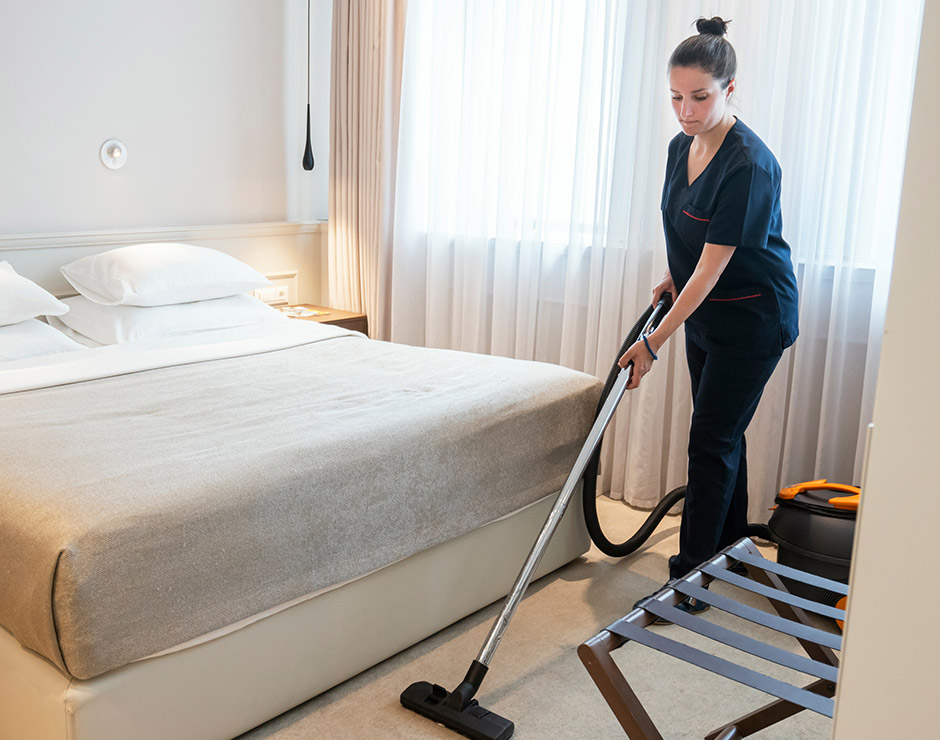
Commercial cleaning for event spaces involves coordinated cleaning services before, during, and after events to maintain hygiene, presentation, and safety standards. Unlike standard office cleaning, event space cleaning must adapt to unpredictable timelines, high foot traffic, and varying event types. The sections below answer the most common questions venue managers and event organisers ask when setting up a cleaning programme.
What types of cleaning does an event space need?
Event spaces typically require three distinct types of cleaning: pre-event preparation cleaning, ongoing maintenance cleaning between bookings, and post-event deep cleaning. Each serves a different purpose and demands a different level of effort. The combination a venue needs depends on how frequently it hosts events and what kinds of events take place.
Pre-event cleaning focuses on presentation. Surfaces are wiped down, floors are polished or vacuumed, toilets are stocked and sanitised, and any residual mess from a previous booking is cleared. The goal is a venue that looks and smells fresh when guests arrive.
Maintenance cleaning keeps the space presentable during longer events such as multi-day conferences or trade fairs. This includes restocking consumables, emptying bins, wiping down high-touch surfaces, and keeping restrooms clean throughout the day.
Post-event cleaning is the most intensive phase. It covers full waste removal, floor cleaning, surface sanitisation, and restoring the venue to its baseline condition, ready for the next booking. In some venues, this also includes specialist tasks such as carpet cleaning, window cleaning, or overhead dusting after a particularly busy period.
How does post-event cleaning differ from regular maintenance cleaning?
Post-event cleaning differs from regular maintenance cleaning in both scope and intensity. Maintenance cleaning is routine and preventive, carried out on a scheduled basis to keep a space in good working order. Post-event cleaning is reactive and restorative, tackling the concentrated mess left behind after a large gathering in a compressed timeframe.
Maintenance cleaning typically involves light tasks: vacuuming, mopping, wiping surfaces, and restocking supplies. It assumes the space has been in normal, controlled use. Post-event cleaning, by contrast, must deal with spilled drinks, food debris, scattered furniture, overflowing bins, and heavily soiled restrooms, often all at once and under time pressure if the next booking is approaching.
Another key difference is staffing. Maintenance cleaning can often be handled by one or two cleaners working a regular shift. Post-event cleaning after a large event frequently requires a team working simultaneously across different areas of the venue to meet turnaround deadlines. The cleaning products used may also differ, with stronger degreasers or disinfectants needed after food and drink events.
How long does commercial cleaning take after a large event?
Commercial cleaning after a large event typically takes between two and six hours, depending on the size of the venue, the number of guests, the type of event, and the size of the cleaning team. A seated dinner for 100 guests in a single room will take considerably less time to clean than a 500-person trade fair spread across multiple halls.
Several factors influence the duration. Venues with hard floors are generally faster to clean than those with carpeting, which may require machine extraction. Events involving food and alcohol generate significantly more soiling than dry conferences. Furniture that needs to be rearranged or removed adds time. And if specialist tasks such as floor waxing or deep restroom sanitisation are required, these extend the overall schedule.
Venue managers planning back-to-back bookings should discuss realistic turnaround windows with their cleaning provider before signing a contract. Rushing post-event cleaning to meet an unrealistic deadline is one of the most common causes of quality issues in event venue cleaning.
What cleaning tasks are included in an event venue cleaning contract?
A commercial cleaning contract for an event venue typically includes waste removal, floor cleaning, surface sanitisation, restroom cleaning and restocking, and kitchen or catering area cleaning. The exact scope varies by venue type and is usually defined in a service specification agreed between the venue and the cleaning provider.
Standard tasks across most event venue contracts include:
- Collecting and removing all waste and recycling
- Sweeping, mopping, or vacuuming all floor surfaces
- Wiping down tables, chairs, counters, and high-touch surfaces
- Cleaning and sanitising toilets, sinks, and restroom fixtures
- Restocking paper products, soap, and other consumables
- Cleaning kitchen surfaces, sinks, and appliances used during the event
- Spot-cleaning walls, doors, and glass partitions
Periodic or specialist tasks are often listed separately and scheduled at agreed intervals rather than after every event. These can include window cleaning, floor polishing or waxing, overhead dusting, and disinfecting for high-risk areas. Venues should clarify which tasks are included in the base contract and which carry an additional cost to avoid surprises later.
Should an event space hire a dedicated cleaner or a cleaning company?
For most event spaces, hiring a professional cleaning company is more practical than employing a dedicated cleaner directly. A cleaning company provides a team that can scale to the demands of any event size, covers absences automatically, and brings specialist equipment and expertise. A single dedicated cleaner works well for small, low-frequency venues but struggles to handle large post-event turnarounds alone.
Hiring a cleaner directly means taking on employment responsibilities: payroll, holiday cover, sick leave, and training. If that cleaner is unavailable on the day of a major event, the venue bears the consequences. A cleaning company absorbs those operational risks and provides continuity of service regardless of individual staff changes.
That said, consistency matters in event venue cleaning. The best cleaning companies assign a dedicated cleaner or a consistent small team to each client, so the cleaner becomes familiar with the venue layout, the client’s standards, and any specific requirements. This combines the reliability of a company with the familiarity of a long-term individual relationship. Carestep, for example, assigns each client a dedicated cleaner as standard practice, which is particularly valuable for venues that need the same high standard delivered reliably across every booking.
What should you look for in a commercial cleaning provider for events?
When choosing a commercial cleaning provider for an event space, prioritise flexibility, proven experience with event venues, transparent service agreements, and a clear quality assurance process. The ability to respond quickly to last-minute schedule changes is especially important in event cleaning, where timelines shift constantly.
Key criteria to evaluate include:
- Flexibility and responsiveness: Can the provider adjust staffing levels or timing at short notice when an event overruns or a booking changes?
- Experience with comparable venues: Has the provider cleaned restaurants, conference centres, fitness clubs, or similar high-traffic spaces?
- Consistent staffing: Will the same cleaner or team be assigned to your venue, or will you face a different crew each time?
- Clear service specification: Is the scope of work documented in writing, including which tasks are included and how quality is measured?
- Ecological products: Does the provider use cleaning products that are effective but environmentally responsible, which matters increasingly to event clients and venue hirers?
- Communication: Is there a clear point of contact who can be reached quickly if an issue arises before or after an event?
Sustainability credentials are worth scrutinising carefully. Some providers make broad environmental claims without the processes to back them up. Look for providers who can demonstrate how they monitor their environmental impact, such as tracking emissions or selecting certified ecological cleaning products, rather than those who simply use the language of sustainability without the substance.
This content was generated with the help of AI and it may contain mistakes
Published September 9, 2026